
 Email:
  Whatsapp:

Clear records
history record

News
Related news
What is 5 axis CNC rotary table used for?
Introduction
Welcome to our latest blog post, where we'll be diving into the exciting world of 5 axis CNC rotary tables! If you're a seasoned machinist or just starting out in the field, chances are you've heard of these innovative machines. But what exactly are they used for? In this post, we'll explore everything from their history and development to their applications in modern manufacturing. So buckle up and get ready to discover how this cutting-edge technology is changing the game for precision machining!
What is 5 axis CNC rotary table used for?
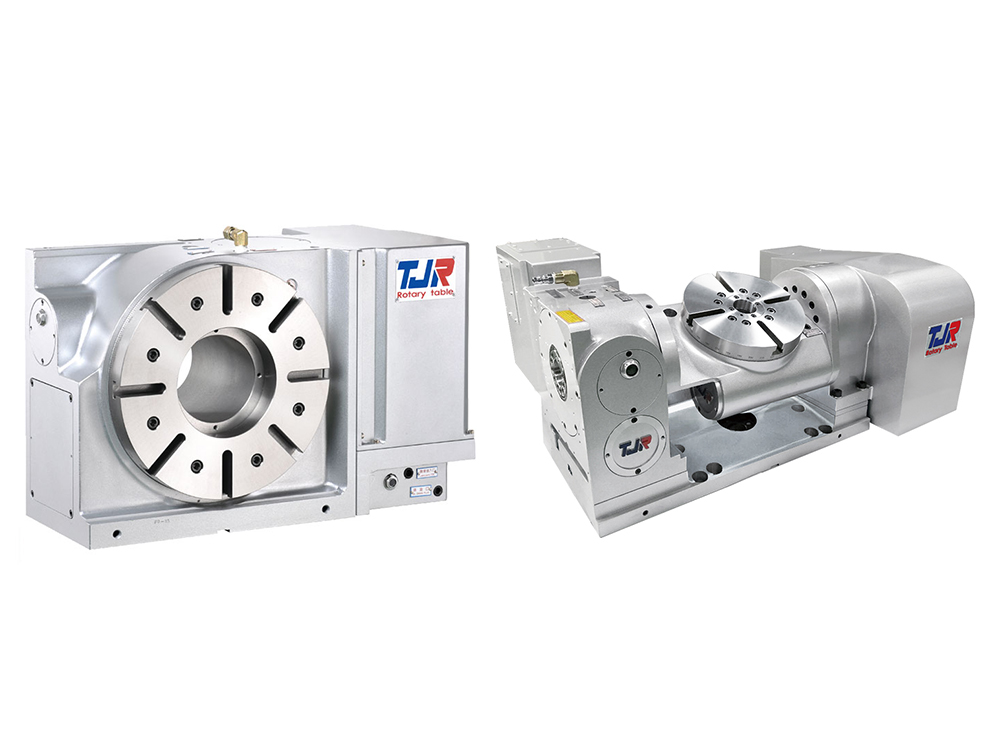
The 5 axis CNC rotary table is used for a variety of machining operations, including milling, drilling, and tapping. It can also be used for counterboring, reaming, and countersinking. The table can be rotated on its X, Y, and Z axes to create complex shapes and geometry.
The different types of 5 axis CNC rotary table
A 5 axis CNC rotary table is a type of CNC machine that uses a rotating table to hold the workpiece while it is being machined. The table can be rotated in any direction and can be tilted to any angle. This allows the machine to create complex shapes and designs that would otherwise be impossible to create with a traditional CNC machine.
There are two main types of 5 axis CNC rotary tables: horizontal and vertical. Horizontal tables are the most common type and are typically used for large projects such as car parts or aerospace components. Vertical tables are less common but are often used for smaller projects such as jewelry or medical implants.
The benefits of using a 5 axis CNC rotary table
There are many benefits of using a 5 axis CNC rotary table. One benefit is that it allows for more accurate machining. When all five axes are used in conjunction, the machine can achieve higher levels of accuracy than with just three axes. In addition, a 5 axis CNC rotary table can also perform more complex machining operations than a 3 axis machine.
Another benefit of using a 5 axis CNC rotary table is that it increases productivity. This is because the machine can complete tasks faster and with less set up time. In addition, a 5 axis CNC rotary table can often perform multiple operations at once, which further increases productivity.
Finally, a 5 axis CNC rotary table is more versatile than a 3 axis machine. This means that it can be used for a wider range of applications. Whether you need to mill, drill, or turn your workpiece, a 5 axis CNC rotary table can handle the job.
How to use a 5 axis CNC rotary table
A 5 axis CNC rotary table is a type of CNC (computer numerical control) machine that uses a rotary table to create parts with five-axis machining. This means that the cutting tool can move along five different axes: X, Y, Z, A (rotation around X), and B (rotation around Y).
The rotary table is attached to the main body of the machine and usually has three or four jaws that grip the workpiece. The cutting tool is mounted on a spindle that is connected to the CNC controller. The controller tells the spindle where to move and how fast to rotate.
To use a 5 axis CNC rotary table, you first need to create a CAD (computer-aided design) model of the part you want to make. This model will be used to generate the G-code, which is a set of instructions that tell the machine what movements to make.
Once you have your G-code, you can load it into the CNC controller and start machining your part. The process is similar to using a 3 axis CNC milling machine, but with the added ability to rotate the workpiece around two additional axes. This allows for more complex shapes and features to be machined into the part.
Conclusion
The 5-axis CNC rotary table is an incredible machine tool that can be used for a variety of tasks, from precise machining and milling to intricate 3D sculpting and metalworking. With its many applications in the automotive, aerospace, medical and military industries, it's no wonder why this technology has become so popular in recent years. If you're looking to take your projects to the next level with precision engineering capabilities and multi-dimensional control, then the 5-axis CNC rotary table is definitely worth considering.


 Tel: (86 510) 68088084
 Whatsapp: +86-15852791610
 Mailbox: info@wxfagor.com

