
 Email:
  Whatsapp:

Clear records
history record

News
Related news
What are the differences between CNC lathes and CNC turning centers?
Like ordinary lathes, CNC turning centers are also used to machine the rotating surfaces of parts. Generally, it can automatically complete the processing of outer cylindrical surface, conical surface, spherical surface and thread, and can also process some complex rotating surfaces, such as hyperboloids.
The workpiece installation methods of lathes and ordinary lathes are basically the same. In order to improve processing efficiency, CNC lathes mostly use hydraulic, pneumatic and electric chucks.
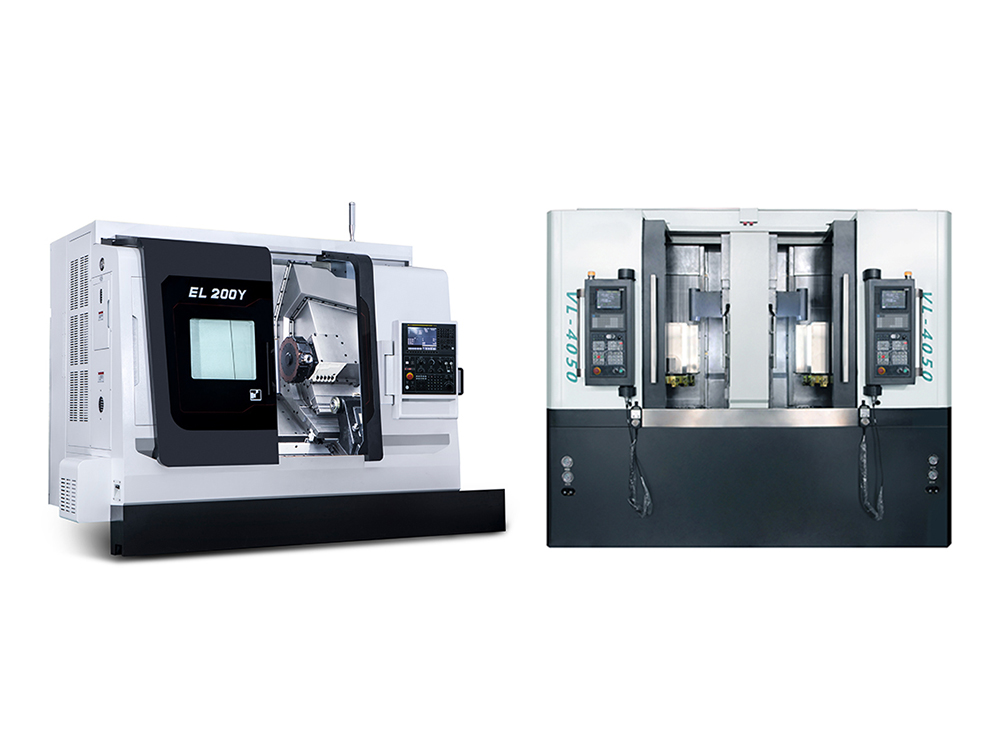
CNC lathes can be divided into two categories: horizontal and vertical. There are two types of horizontal lathes: horizontal guide rails and inclined guide rails. Higher-grade CNC sleeper cars generally use inclined guide rails. According to the number of tool rests, it can be divided into single-tool rest CNC lathes and double-tool rest CNC lathes. The former is two-coordinate control, and the latter is 4-coordinate control. Most of the double-tool rest cars use inclined guide rails.
The shape of the CNC turning center is similar to that of an ordinary lathe, that is, it is composed of a bed, a spindle box, a tool holder, a feed system, a pressure system, and a cooling and lubrication system.
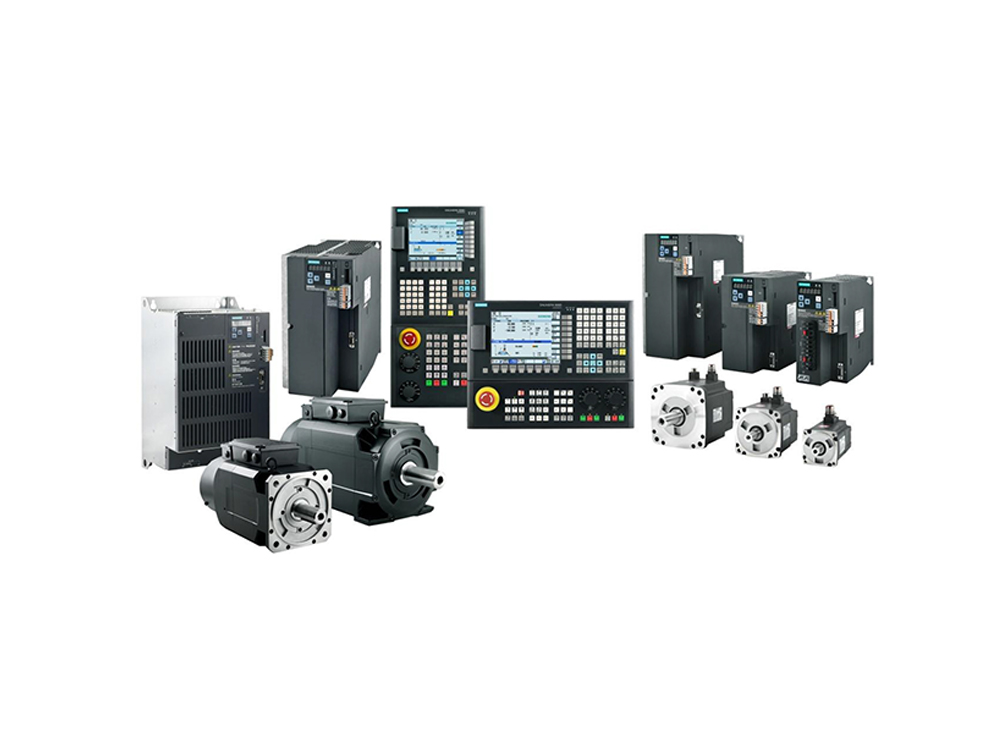
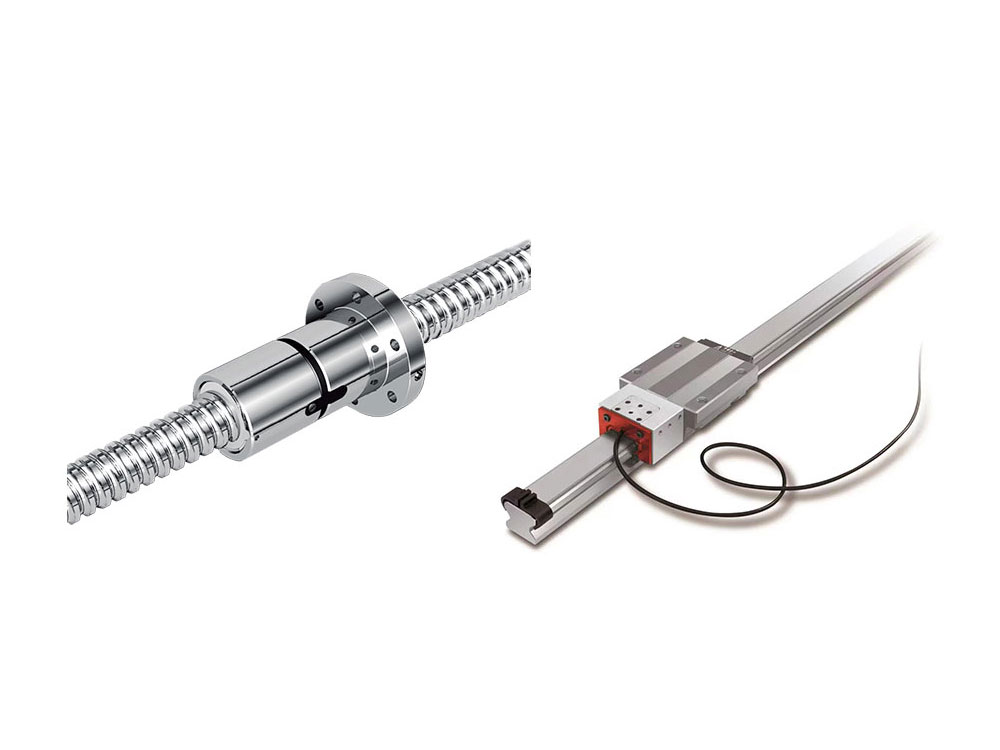
The feed system of the CNC turning center is qualitatively different from the ordinary lathe. The traditional ordinary lathe has a feed box and an exchange gear rack, while the CNC lathe directly uses the servo motor to drive the slide plate and the tool holder through the ball screw to realize the feeding movement. Therefore, the structure of the feeding system is greatly simplified.
There are many varieties and specifications of CNC turning centers, which can be classified as follows.
1. According to the position of the lathe spindle:
A. Vertical CNC lathes Vertical CNC lathes are referred to as CNC vertical lathes for short. The main shaft of the lathe is perpendicular to the horizontal plane, and a circular worktable with a large diameter is used to clamp workpieces, flexible manufacturing system. This type of machine tool is mainly used to process large and complex parts with large radial dimensions and relatively small axial dimensions.
B. Horizontal CNC lathes Horizontal CNC lathes are further divided into CNC horizontal rail horizontal lathes and CNC inclined rail horizontal lathes. Its inclined guide rail structure makes the lathe more rigid and easy to remove chips.
2. According to the basic types of processed parts:
A. Chuck-type CNC lathes have no tailstock and are suitable for turning discs (including short shafts). Most of the clamping methods are electric or hydraulic control, and most of the chuck structures have adjustable jaws or non-quenched jaws (ie soft jaws).
B. Horizontal CNC lathes These types of lathes are equipped with ordinary tailstocks or CNC tailstocks, which are suitable for turning longer parts and disc parts with not too large diameters.
3. According to the number of tool holders:
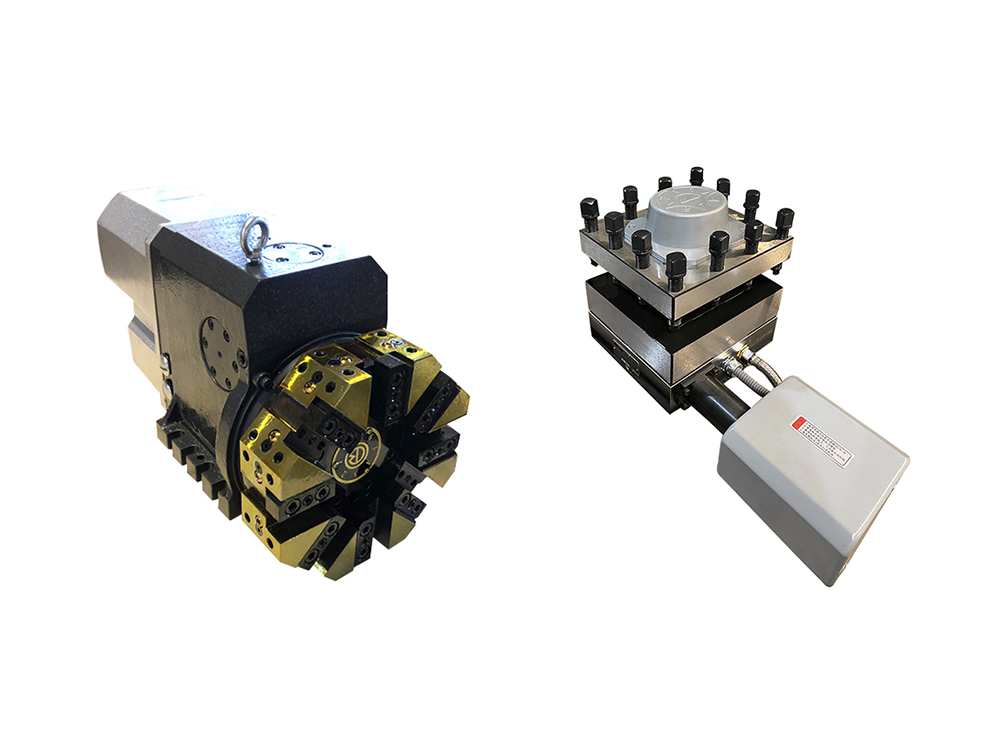
A. Single-turret CNC lathes CNC lathes are generally equipped with various forms of single-tool rests, such as four-station horizontal indexing tool rests or multi-station turret automatic indexing tool rests.
B. Double-turret CNC lathe The double-turret configuration of this type of lathe is distributed in parallel or perpendicular to each other.
4. Classification by function:
A. Economical CNC lathes are simple CNC lathes formed by transforming the feed system of ordinary lathes with stepping motors and single-chip microcomputers. It is suitable for turning of rotary parts with low requirements.
B. The ordinary CNC lathe is specially designed in structure according to the turning processing requirements and is equipped with a general CNC system. The CNC system has strong functions, high automation and machining accuracy, and is suitable for turning of general rotary parts. This CNC lathe can control two coordinate axes at the same time, namely the X axis and the Z axis.
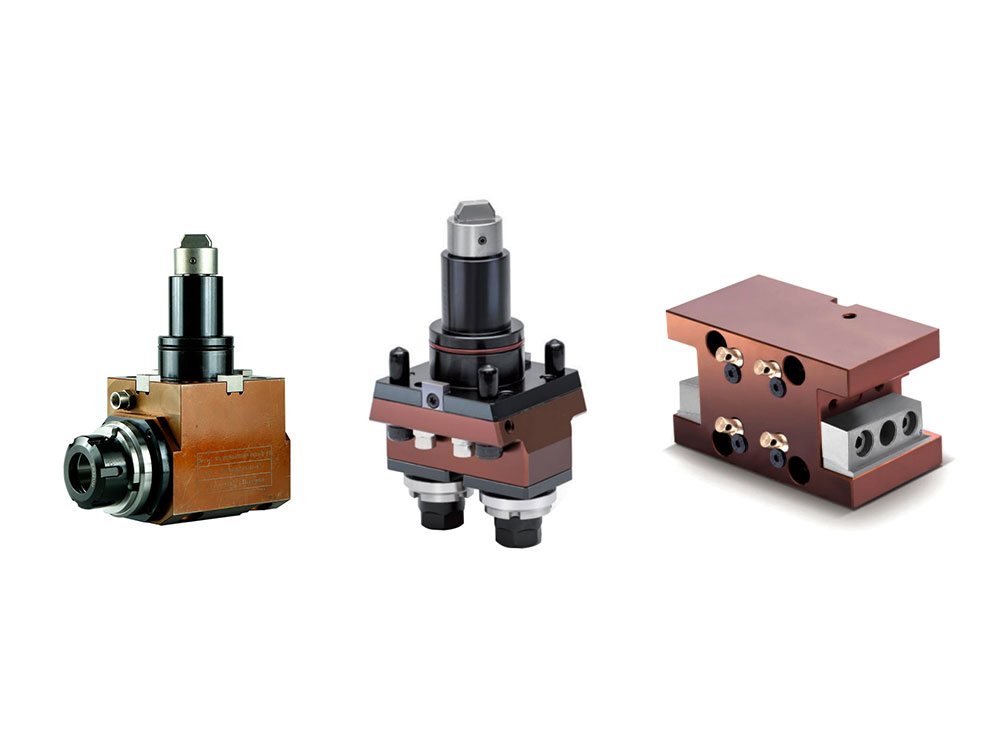
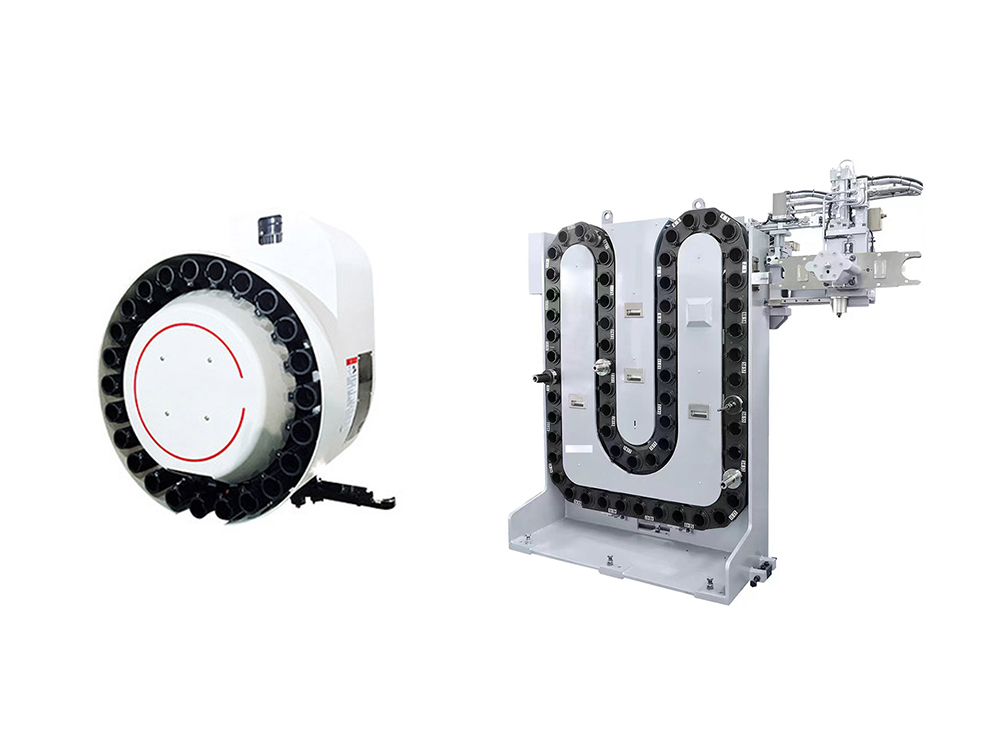
C. On the basis of the ordinary CNC lathe, the CNC turning center adds the C axis and the power head. The more advanced CNC lathe has a tool magazine, which can control the three coordinate axes of X, Z and C. The linkage control axis can be (X , Z), (X, C) or (Z, C). Due to the addition of the C-axis and the milling power head, the processing function of this CNC lathe is greatly enhanced. In addition to general turning, radial and axial milling, surface milling, holes and radial holes whose centerline is not in the center of rotation of the part can be performed. drilling, etc.


 Tel: (86 510) 68088084
 Whatsapp: +86-15852791610
 Mailbox: info@wxfagor.com

