
 Email:
  Whatsapp:

Clear records
history record

News

Related news
Some operation skills of CNC lathe processing
1. Programming skills
(1)Processing sequence of parts:
Drill first and then flat end (this is to prevent material shrinkage during drilling);
Rough turning first, then fine turning (this is to ensure the accuracy of parts);
The one with the larger tolerance is processed first and the one with the smaller tolerance is processed last (this is to ensure that the surface of the small tolerance size is not scratched and prevent the deformation of the part).
(2) Select a reasonable speed, feed rate and depth of cut according to the hardness of the material:
1) The carbon steel material is selected for high speed, high feed rate, and large depth of cut. For example: 1Gr11, select S1600, F0.2, depth of cut 2mm;
2) Carbide chooses low speed, low feed rate, and small depth of cut. Such as: GH4033, choose S800, F0.08, depth of cut 0.5mm;
3) Titanium alloys choose low speed, high feed rate, and small depth of cut. Such as: Ti6, select S400, F0.2, depth of cut 0.3mm. Take the processing of a certain part as an example: the material is K414, which is an extra-hard material. After many tests, the final choice is S360, F0.1, and depth of cut 0.2, before processing a qualified part.
2. Knife setting skills
Tool setting is divided into tool setting instrument tool setting and direct tool setting. Most of the lathes in our factory do not have a tool setting instrument, which is direct tool setting. The tool setting technique mentioned below is direct tool setting.
First select the center of the right end face of the part as the tool setting point, and set it as the zero point. After the machine returns to the origin, each tool to be used is set with the center of the right end face of the part as the zero point; when the tool touches the right end face, input Z0 and click to measure. The measured value will be automatically recorded in the tool compensation value of the tool, which means that the Z-axis tool setting is done, and the X-axis tool setting is a trial cutting tool setting. The outer circle of the part with the tool turning is less, and the value of the turned outer circle is measured ( For example, x is 20mm), input x20, click to measure, the tool compensation value will automatically record the measured value, and the x-axis is also aligned at this time; with this tool setting method, even if the machine tool is powered off, the alignment will not change after the power is turned on and restarted. The tool value can be applied to mass production of the same part for a long time, and there is no need to re-set the tool when the lathe is turned off during the period.
3. Debugging skills
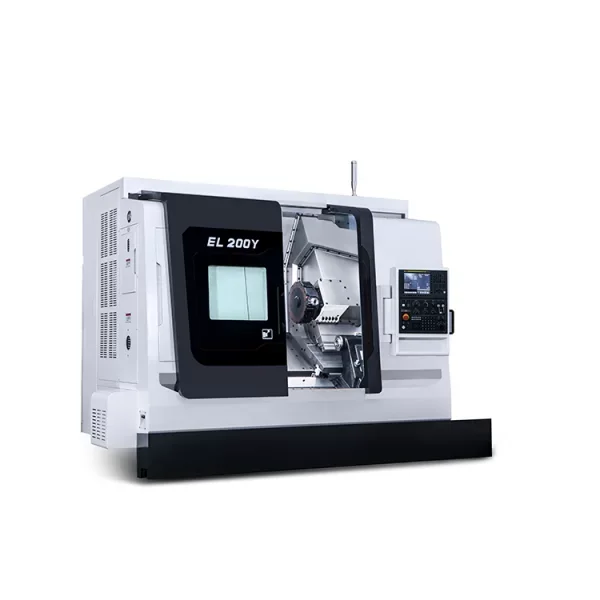
After the parts are programmed and the tool is adjusted, trial cutting and debugging are required. In order to prevent errors in the program and errors in tool setting, which may cause collision accidents, we should first carry out idle stroke simulation processing, and face it in the coordinate system of the machine tool. The tool moves to the right as a whole by 2-3 times the total length of the part; then start the simulated processing. After the simulated processing is completed, confirm that the program and tool setting are correct, and then start processing the part. After the first part is processed, self-check first to confirm that it is qualified , Then find a full-time inspection and inspection. After the full-time inspection confirms that it is qualified, it means that the debugging is over.
4. complete the processing of parts
After the first piece of trial cutting is completed, the parts will be mass-produced, but the qualification of the first piece does not mean that the whole batch of parts will be qualified, because in the process of processing, the tool will be worn due to the different processing materials, and the processing materials If the material is soft, the tool wear will be small, and the processing material will be hard, so the tool wear will be fast. Therefore, in the process of processing, it is necessary to check frequently, increase and decrease the tool compensation value in time to ensure that the parts are qualified.
Taking a certain part as an example, the processing material is K414, and the total processing length is 180mm. Because the material is extremely hard, the tool wears very quickly during processing. From the starting point to the end point, there will be a slight deviation of 10-20mm due to the tool wear. Therefore, we must In the program, a slight degree of 10-20mm is artificially added, so that the parts can be guaranteed to be qualified.
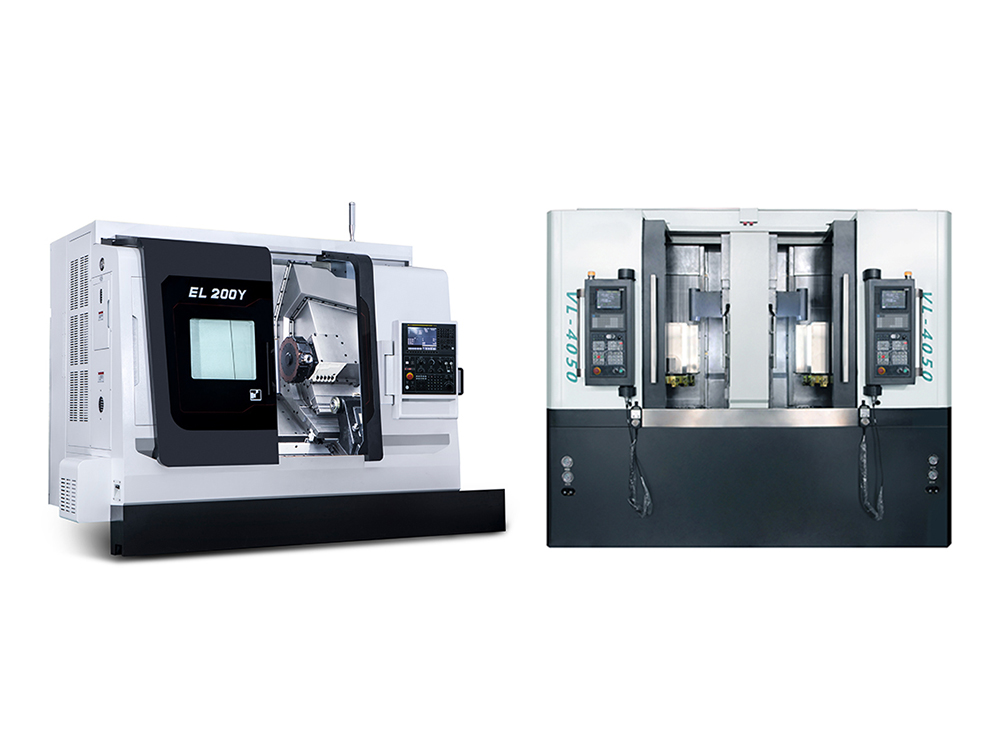
Fagor Technology Co., Ltd. is a professional supplier specializing in the production, testing and sales of high-quality, high-precision CNC machine tools. Production of professional formal CNC lathes. Welcome to visit the website or contact us anytime.


 Tel: (86 510) 68088084
 Whatsapp: +86-15852791610
 Mailbox: info@wxfagor.com

