
 Email:
  Whatsapp: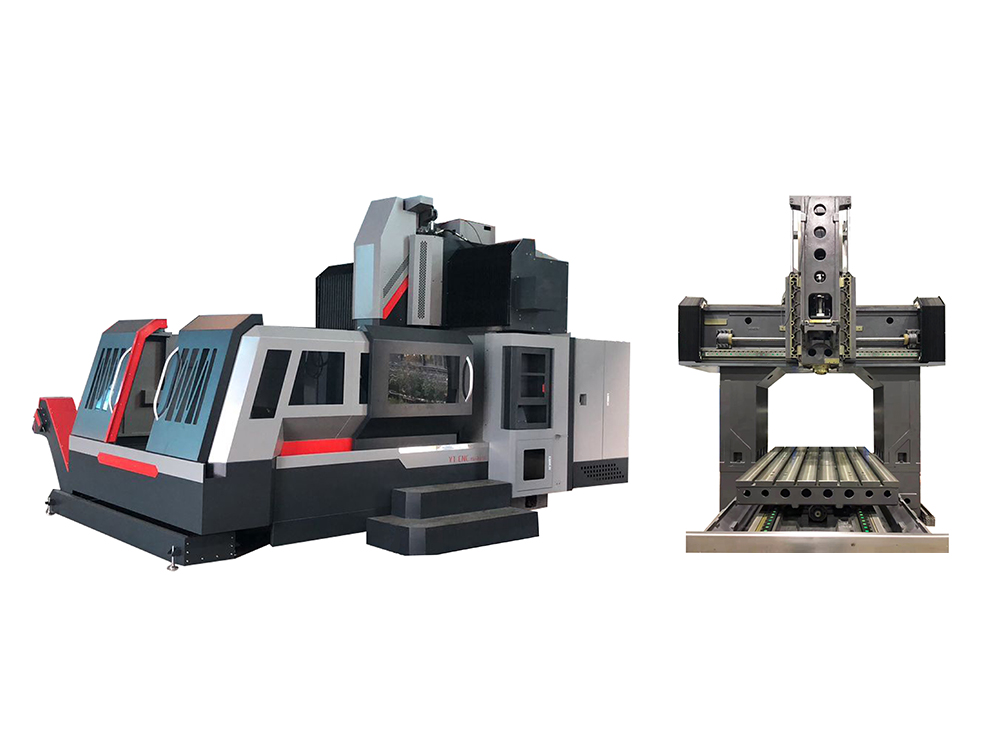

Clear records
history record

News

Related news
How to Choose the Right CNC Tool Magazine for Your Machine: Types, Benefits, and Selection Guide
What is a CNC Tool Magazine?
A CNC tool magazine is a system used to store and manage the cutting tools of CNC machines. It works in conjunction with an "Automatic Tool Changer (ATC)" to automatically swap tools during production, reducing manual intervention and ensuring consistent machining quality.
Main functions of the tool magazine/automatic tool changer:
Quick automatic tool change
Organized tool storage for easy management
Increased production efficiency and reduced downtime
Maintains machining accuracy and repeatability
By using the appropriate CNC tool magazine, your machine can perform complex machining tasks without the need for frequent manual tool changes.
What are the different types of CNC Tool Magazines?
CNC tool magazines come in various types, each designed for different machining needs:

1. Disc-Type Tool Magazine (Carousel Tool Magazine)
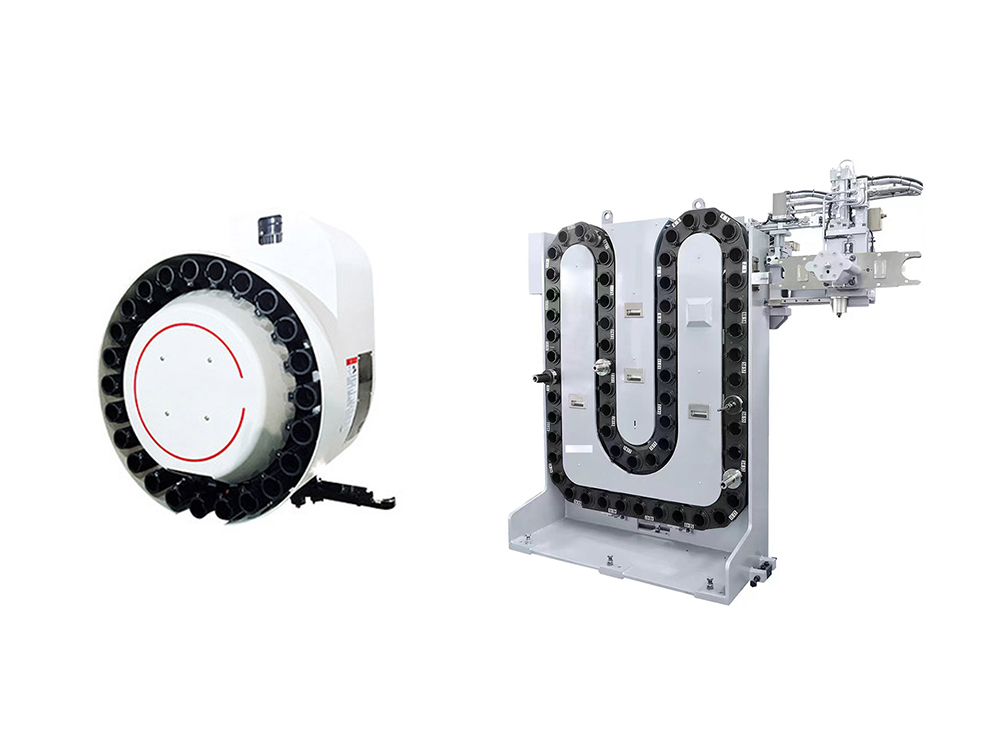
The disc-type tool magazine is the most common form, with a simple structure, typically used in small CNC machines. The tool capacity usually ranges from several to dozens of tools. This type changes tools by rotating the magazine and positioning the next required tool at the spindle.
Features of Disc-Type Tool Magazine:Simple structure, low manufacturing cost;Slower tool change speed due to the rotational movement;Suitable for small CNC machines due to limited tool capacity.
2. Manipulator Type Tool Magazine
The manipulator type tool magazine is a highly automated tool storage system commonly used in large CNC machines. It can hold anywhere from dozens to hundreds of tools. The tool-changing process is performed by a mechanical arm, which picks up the required tool from the magazine and transfers it to the spindle position for replacement.
Features of the Manipulator Type Tool Magazine:This type of tool magazine offers a high level of automation and enables fast tool change operations. In addition, since the manipulator can select and retrieve any tool as needed, it provides excellent flexibility.
However, the manipulator type tool magazine has a relatively complex structure, higher manufacturing costs, and stricter requirements for the operating environment.
3. Umbrella-Type Tool Magazine
Named for its umbrella-like shape, the umbrella tool magazine is typically located at the top of the machine, where it uses a rotating and lifting mechanism to select and position the tools.
Features of Umbrella-Type Tool Magazine:Limited tool capacity, usually no more than 24 tools;Simple tool change process but slower than others;Compact design, ideal for medium-to-small CNC machining centers;May not be efficient for tasks requiring frequent tool changes.
4. Chain-Type Tool Magazine
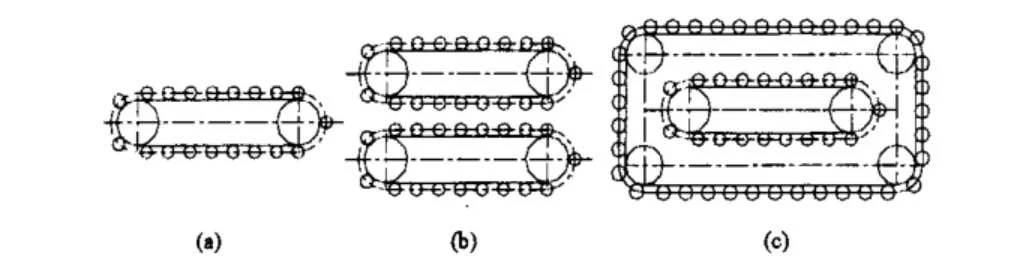
As shown in the figure above, it includes single-loop and multi-loop chains. The chain structure can have various configurations and is suitable for tool magazines with large capacities while occupying minimal space.
The chain-type tool magazine is a larger tool storage system, often used in larger CNC machines. Its capacity can range from several hundred to over a thousand tools. The tool change is achieved by moving a chain to position the next required tool at the spindle.
Features of Chain-Type Tool Magazine:Large tool capacity, suitable for large CNC machines;Faster tool change speed due to quicker chain movement;More complex structure, higher manufacturing cost.
5. Linear Tool Magazine
In this design, tools are arranged in a straight line, making for a simple structure.
Features of Linear Tool Magazine:Small tool capacity, usually 8 to 12 tools;Less common due to its limited tool capacity.
6. Other Types of Tool Magazines
Grid Box Tool Magazine: Compact with large capacity and high space utilization, but longer tool change times and more complex auxiliary mechanisms.
Fixed Tool Magazine: Simple structure, slower tool change, suitable for low-frequency tool changes or simple machining tasks.
Manual Tool Magazine: Allows the operator to manually change tools, providing convenience but at a slower rate.
Automatic Tool Magazine: Uses robotic arms, rotating discs, or chains to enable rapid tool changes, storing many tools and offering high tool change speed. Ideal for high-density tool setups and frequent tool switching.
Tool Change Mechanism
In the automatic tool changing system of CNC machines, the device that transfers and loads/unloads tools between the tool magazine and the machine spindle is called the tool changer.
According to whether a manipulator is involved in the tool change process, tool changers can be classified into two types: manipulator-type tool change and non-manipulator tool change.
Systems equipped with a manipulator are generally more flexible in tool magazine configuration, spindle positioning, and tool capacity, while also achieving shorter tool change times.
In contrast, non-manipulator systems feature simpler structures but require longer tool change times.
1. Non-Manipulator Tool Change
In non-manipulator tool change systems, the tools in the magazine are arranged parallel to the spindle.
When changing tools, the spindle head moves above the tool magazine to the tool change position.
The spindle then moves along the Z-axis to insert the used tool into an empty slot in the magazine.
After that, the magazine rotates to bring the next tool to the standby position.
Finally, the spindle moves again along the Z-axis to pick up the new tool from the magazine and insert it into the spindle.
It can be seen that the used tool must first be returned to the magazine before the new tool can be taken out — since these two actions cannot occur simultaneously, the tool change time is relatively long.
2. Manipulator Tool Change
In manipulator-based tool change systems, a mechanical arm removes the used tool from the spindle while another arm simultaneously takes the standby tool from the tool magazine.
The two tools are then exchanged to complete the tool change process.
This type of tool exchange using a manipulator is the most widely used method, as it offers high flexibility and significantly reduces tool change time.
How to Choose the Right Tool Magazine
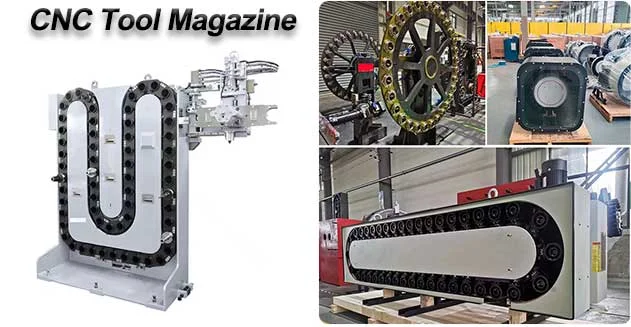
When selecting the appropriate tool magazine, several factors need to be considered, such as the type of machine, tool capacity, tool change speed, reliability, and maintenance costs. Here are key considerations for choosing the right tool magazine:
1. Consider the Machine Type
Vertical and Gantry Machines:
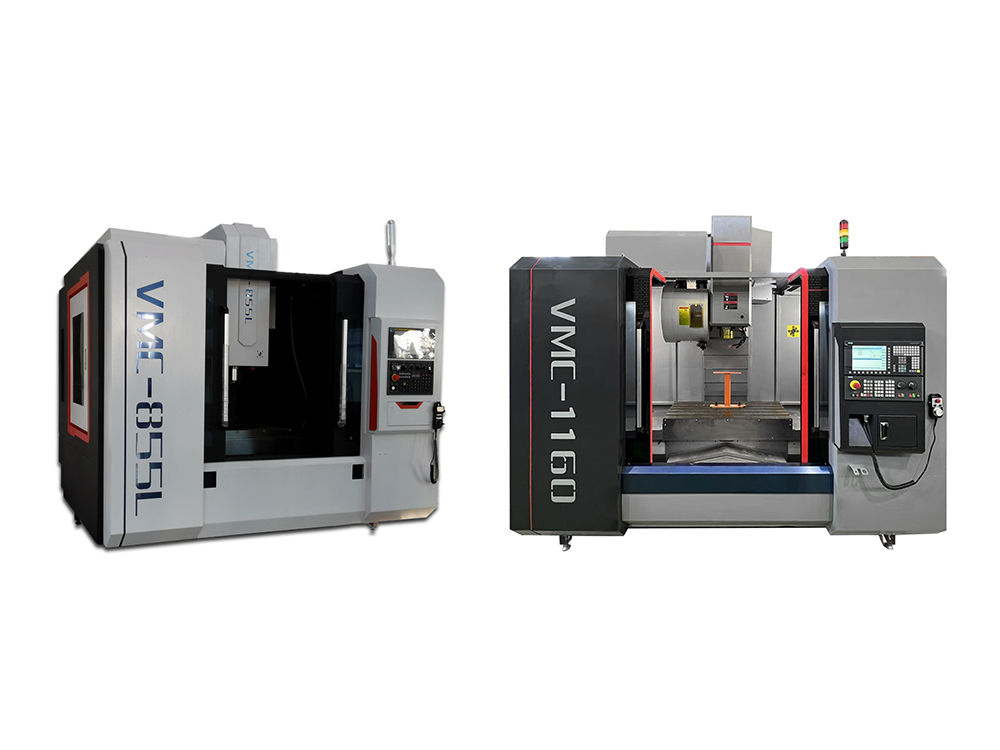
Vertical and gantry-type CNC machines typically require compact tool magazines to save space and improve operational efficiency. Umbrella-type and chain-type tool magazines are both ideal options for these machines.
The umbrella-type magazine offers fast tool change speed and a simple structure, making it suitable for environments with limited space.
The chain-type magazine, on the other hand, provides flexible tool storage and larger capacity, making it ideal for complex machining tasks.
High-Speed Multi-Axis Machines:
High-speed multi-axis CNC machines demand high machining accuracy and fast tool change capabilities. These machines are best equipped with chain-type or disc-type tool magazines.
Chain-type magazines excel in high-speed tool changing, while disc-type magazines are known for their stability and precision—ensuring consistent quality and minimizing machining errors.
High-Precision Machining (Aerospace & Automotive Industries):
In industries such as aerospace and automotive, stability and accuracy of the tool magazine are critical.
Disc-type and hat-type (carousel) tool magazines are recommended for these applications, as both provide strong stability and high tool change precision, ensuring accurate tool positioning and minimizing machining deviations.
2. Tool Capacity and Dimensions
Tool Magazine Capacity:
Capacity is one of the most important factors in selecting a tool magazine. It must be sufficient to accommodate all the tools required for production.
Different production lines and workpieces demand different tool magazine sizes. The capacity should be determined based on the number, type, and scale of tools used in your production process.
Tool Compatibility:
Ensure the selected tool magazine is compatible with the tool dimensions, such as tool length and diameter.
Some tool magazines have stricter size limits for longer or larger tools. Future tool type and size variations should also be considered to avoid compatibility issues during production expansion.
Future Expandability:
It is important to consider the potential for future expansion. Increases in production volume or changes in machining processes may require more tools or different tool types.
Selecting a tool magazine with sufficient expansion capability can reduce the need for frequent manual adjustments, improving long-term productivity and flexibility.
3. Tool Change Speed
Tool Change Efficiency:
Tool change speed directly affects the productivity of CNC machines. In mass production, fast tool changing minimizes downtime and increases overall throughput.
Umbrella-Type Tool Magazine:
This type offers the fastest tool change speed, making it ideal for high-speed, high-frequency production environments where efficiency is critical.
Hat-Type (Carousel) Tool Magazine:
Although it typically holds more tools, its tool change speed is slightly slower. It is suitable for production tasks with higher tool quantities but less frequent tool changes.
Select the right balance between tool change speed and capacity based on actual production needs.
For production lines with frequent tool changes, prioritize magazines with higher tool change efficiency.
For large-scale production with fewer tool changes, choose higher-capacity tool magazines.
4. Reliability and Maintenance
Tool Magazine Lifespan:
The service life of a tool magazine directly impacts overall production efficiency.
When choosing, prioritize materials and structural design.
High-quality materials such as wear-resistant alloys and precision manufacturing processes can significantly extend service life and reduce failures caused by wear.
Ease of Maintenance:
A tool magazine that is easy to maintain reduces downtime and maintenance costs.
Check if the design allows convenient cleaning, lubrication, and part replacement.
Also, ensure that spare parts are readily available and that technical support is provided by the manufacturer.
Spare Parts and Support:
Ensure the selected tool magazine has a reliable supply of spare parts, especially for long-term or heavy-duty use.
The availability of prompt after-sales service and technical support is also crucial for minimizing downtime and maintaining continuous production.
5. Cost and Performance
Initial Investment vs. Long-Term Benefits:
High-end tool magazines may require higher upfront investment, but they greatly enhance production efficiency, reduce downtime, and extend machine life.
Therefore, cost evaluation should consider not only the purchase price but also the long-term operational benefits.
A high-quality tool magazine can provide substantial long-term savings through durability and efficiency improvements.
Total Cost of Ownership (TCO):
When choosing a tool magazine, evaluate the overall cost, including purchase cost, maintenance cost, downtime loss, and the productivity gains from higher efficiency.
Although high-performance tool magazines are more expensive, they significantly increase productivity, reduce downtime, and deliver a higher return on investment (ROI) over time.
There is no "best" tool magazine, only the "most suitable" one for your needs. Every machining challenge deserves a tailored solution. Contact our technical experts today for a free consultation!
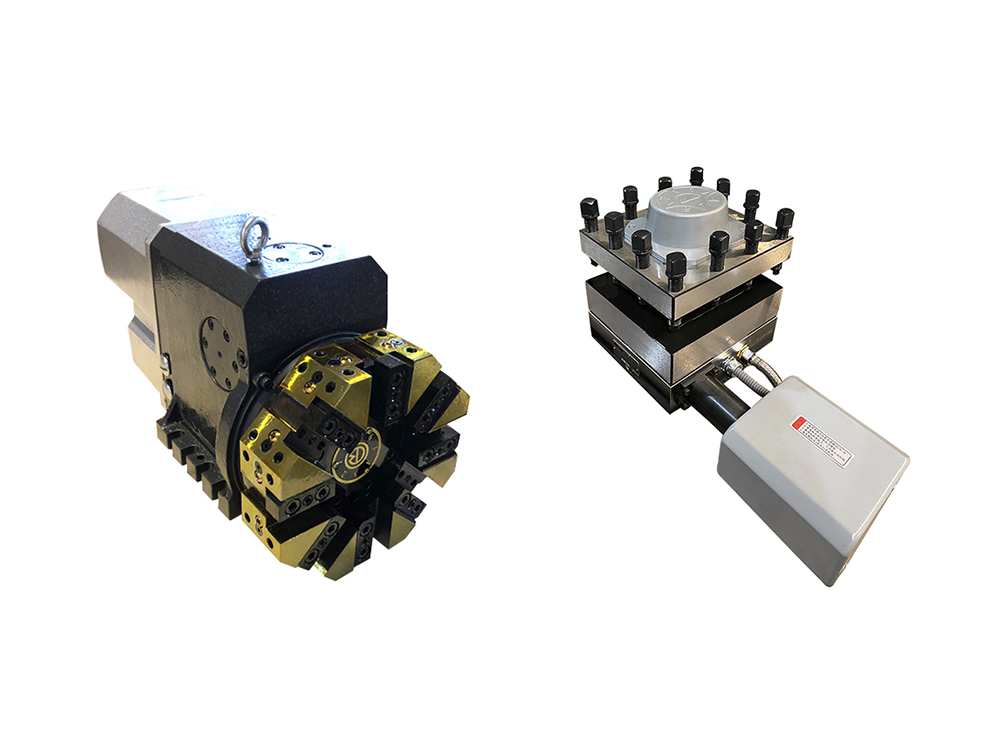
At Fagor Technology, we offer a wide range of tool magazines, including disc-type, chain-type, robotic arm, and umbrella-type systems. Our experienced team will help you choose the ideal configuration for your specific CNC machine model, material types, and production needs. Enhance your machining efficiency and precision with the best tool magazine solution for your business!


 Tel: (86 510) 68088084
 Whatsapp: +86-15852791610
 Mailbox: info@wxfagor.com

